Coolidge Artificial Turf
Desert-Adapted Turf Installs in Coolidge, AZ
Desert-adapted artificial turf installs in Coolidge, AZ with heat-resistant fiber and reflective base for extreme summer sun. Free estimates.
- 15+ Years local experience
- 500+ Projects completed
- Licensed & Insured
Serving Coolidge and nearby communities.
Standard big-box turf wasn't built for Coolidge summers. Surface temperatures on untreated turf can get uncomfortably hot by midday, and fibers not rated for UV exposure fade and get brittle faster than advertised. Coolidge Artificial Turf installs desert-adapted turf systems specifically chosen for extended high-heat exposure.
The difference shows up in fiber composition, infill choice, and how the base is prepped to avoid trapping heat underneath the surface.
What's included
What's Included with Desert-Adapted Turf Installs
- Typically included — Heat-rated fiber selection, reflective base prep, expansion-allowance seaming, surface temperature testing after install.
- Optional — Cooling infill upgrade, shade sail coordination for high-use zones, extra UV topcoat treatment.
- Customer prep — Flag any areas that get direct unshaded sun most of the day so we can prioritize heat-resistant fiber there.
Want a clearer scope?
Get a Free EstimateHow it works
How Our Desert-Adapted Turf Installs Process Works
 Step 1
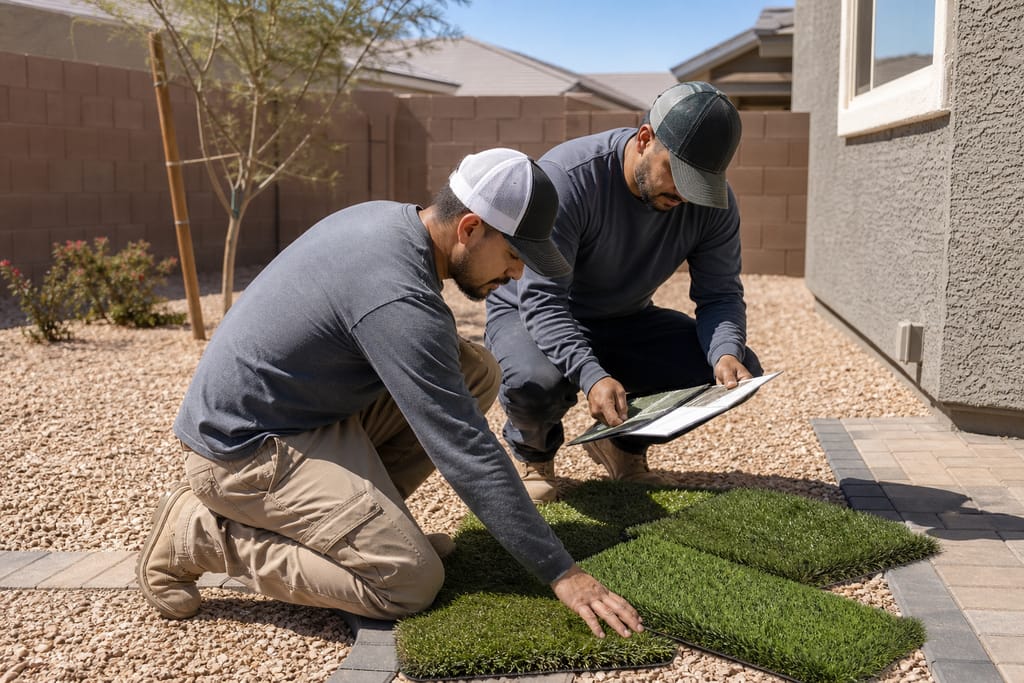
Heat tolerance planning
Turf products are chosen based on how they hold up to extended high-heat and direct sun exposure.
 Step 2
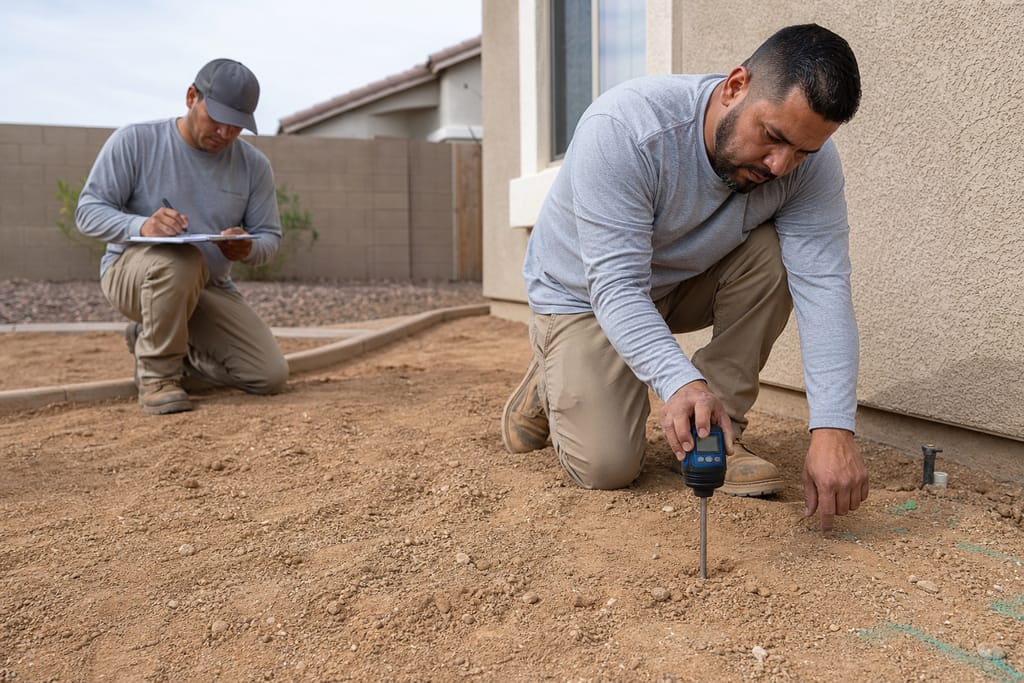
Soil moisture testing
Existing soil gets checked to plan drainage that works with Coolidge's dry, compact conditions.
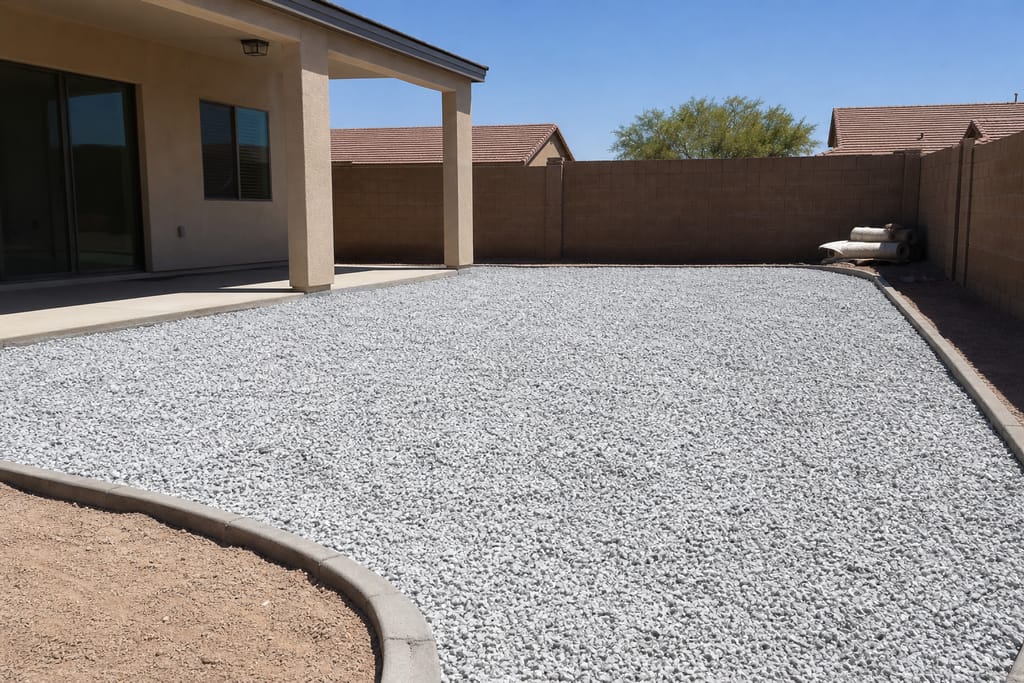 Step 3
Reflective base prep
Base materials are chosen to reduce how much heat gets trapped under the turf.
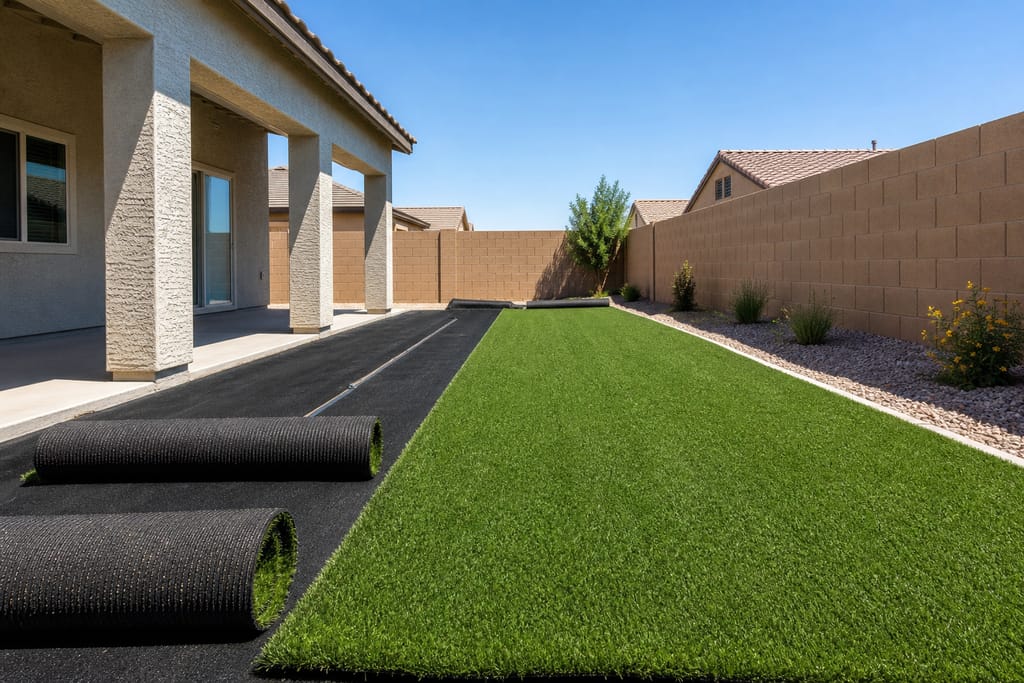 Step 4
Heat-resistant turf laying
Desert-rated fiber is installed across the whole area.
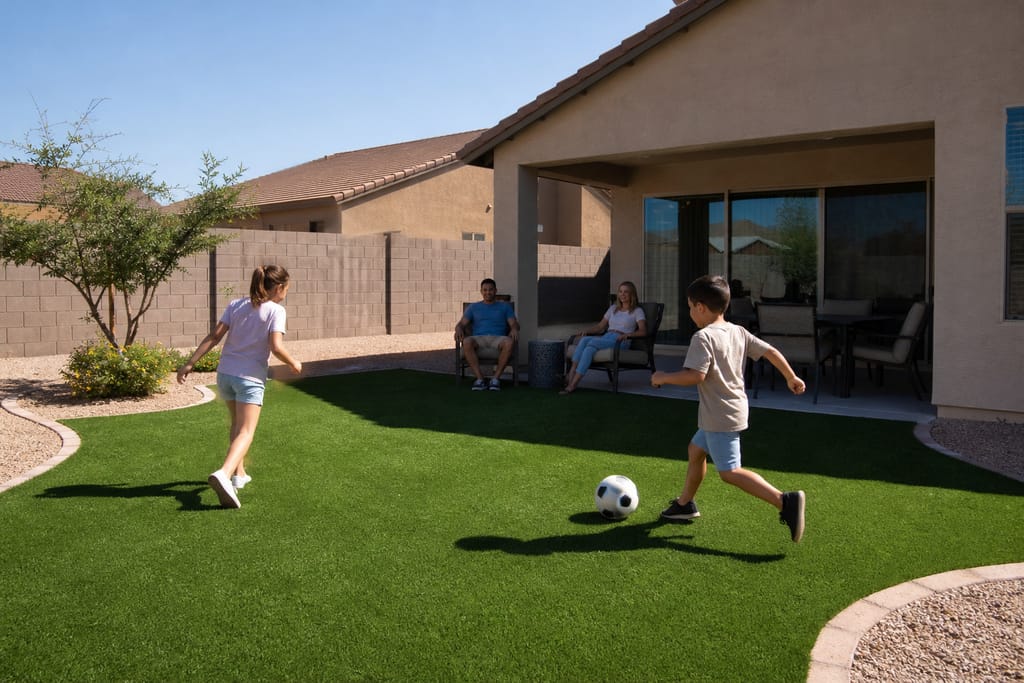 Step 5
Expansion gap allowance
Seams get small built-in gaps so the material can expand without buckling in summer heat.
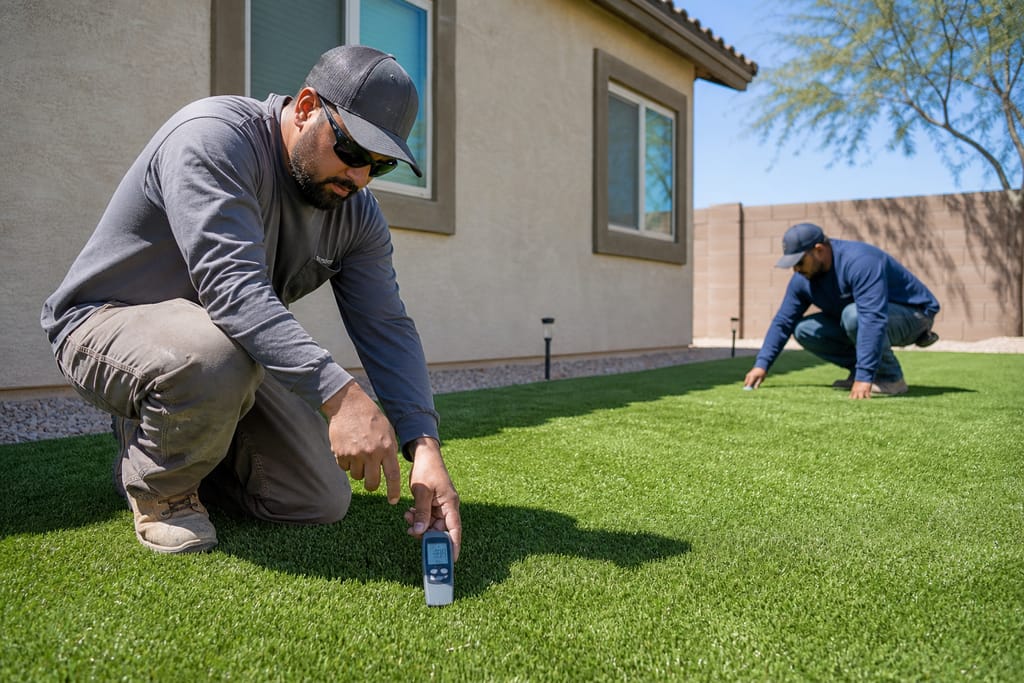 Step 6
Surface cooling check
The finished surface is tested for temperature performance in direct sun.
Materials
Materials and Methods for Desert-Adapted Turf Installs
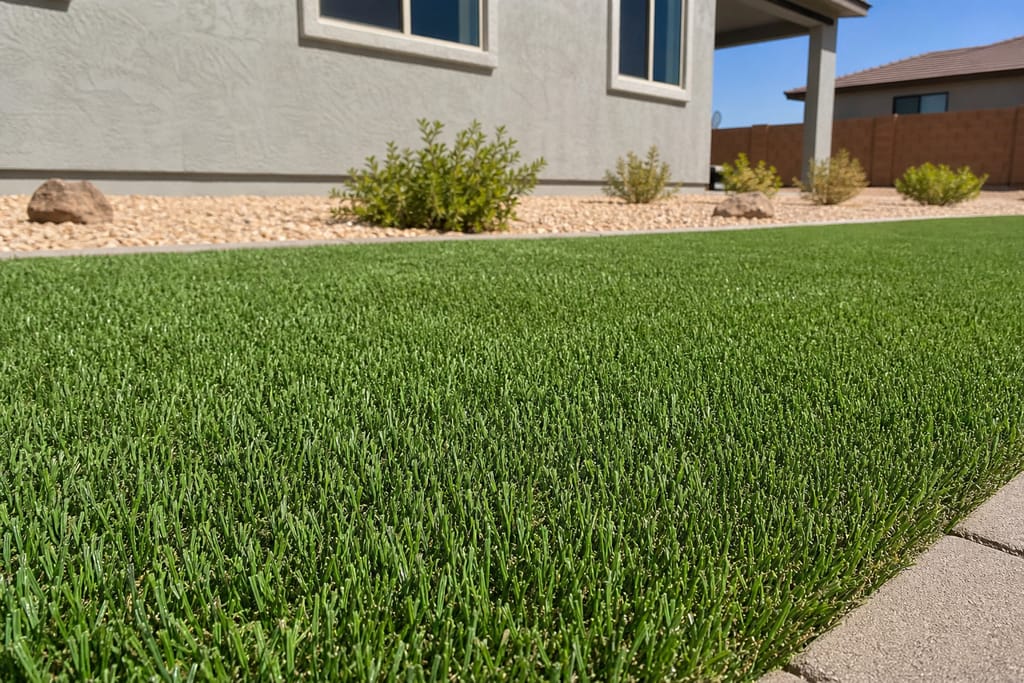
Heat-resistant turf fibers
Fibers engineered to resist melting and premature fading through months of 105°F-plus days.
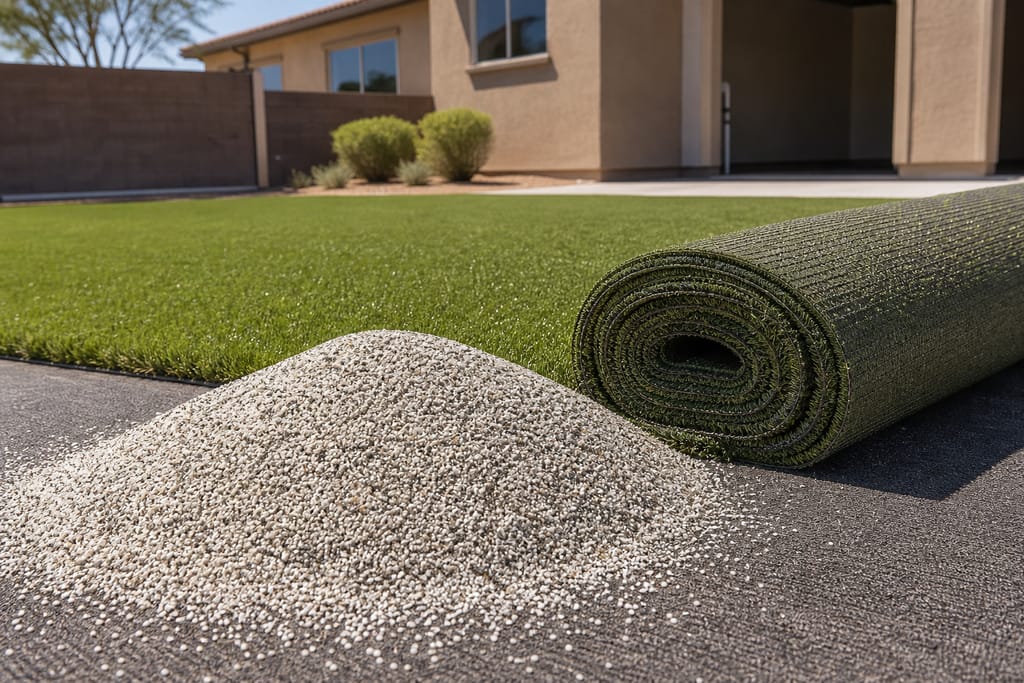
Reflective infill blend
Infill reflects heat instead of absorbing it, keeping surface temperatures more manageable.
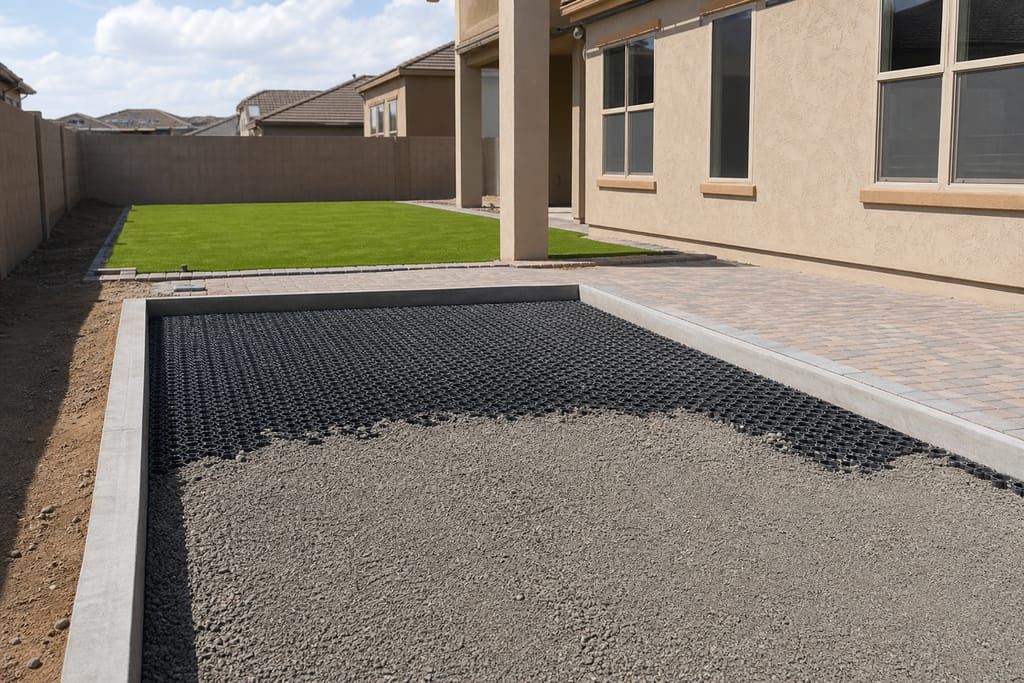
Drought-tolerant base layer
Base material stays stable in Coolidge's dry, low-moisture soil conditions without shifting.
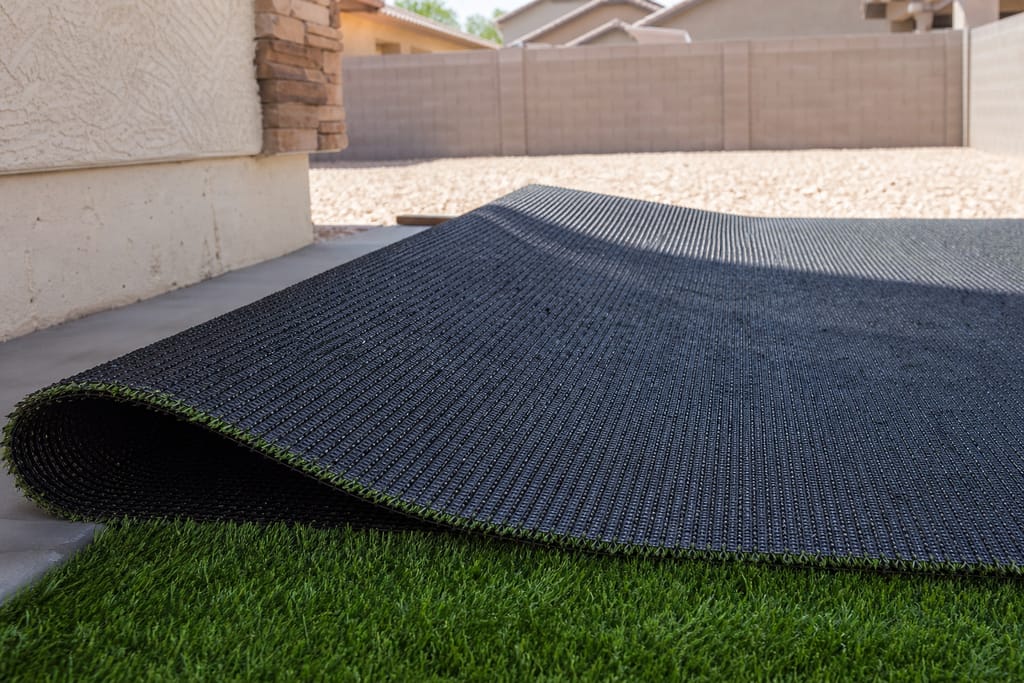
UV-protected backing
Backing treated with UV stabilizers resists cracking after years of direct desert sun.
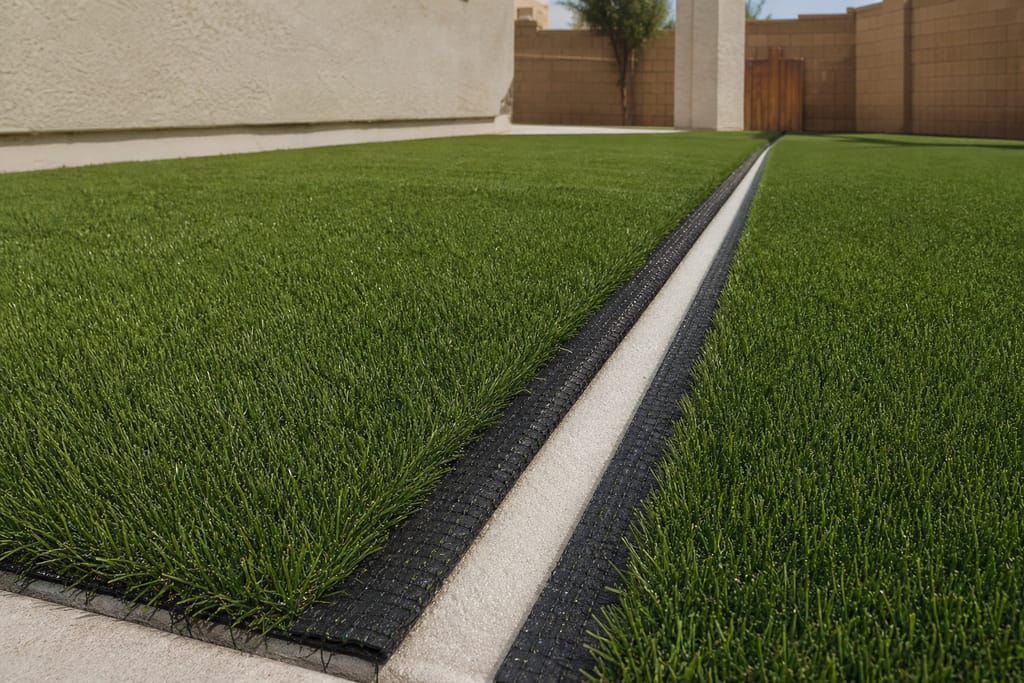
Thermal break seams
A seaming method built to handle the expansion turf goes through during extreme heat cycles.
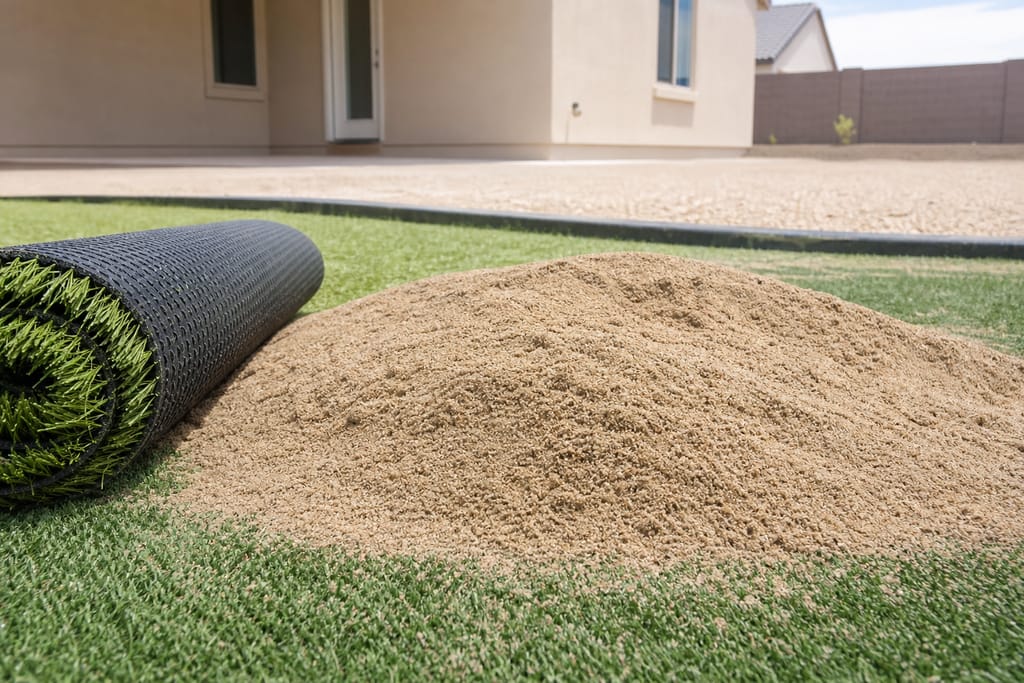
Sand-based filler
Sand filler adds stability while still allowing some heat to dissipate through the surface.
Questions on materials?
Get a Free EstimateTimeline
How Long Does a Desert-Adapted Turf Install Take?
Here's how a typical heat-rated turf install runs.
- 01
Consult and material selection
same day - 02
Base prep with reflective layer
1 day - 03
Turf laying with expansion seams
1 day - 04
Surface temperature testing
same day
Need a schedule that fits?
Get a Free EstimateBefore & after
Before and After Desert-Adapted Turf Installs
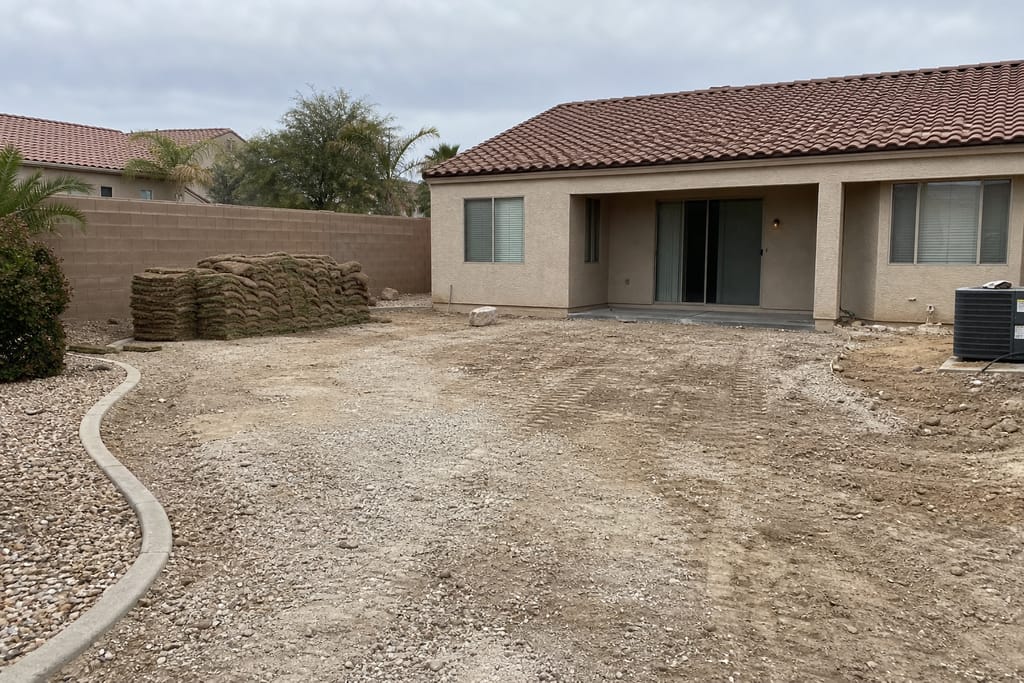
Before 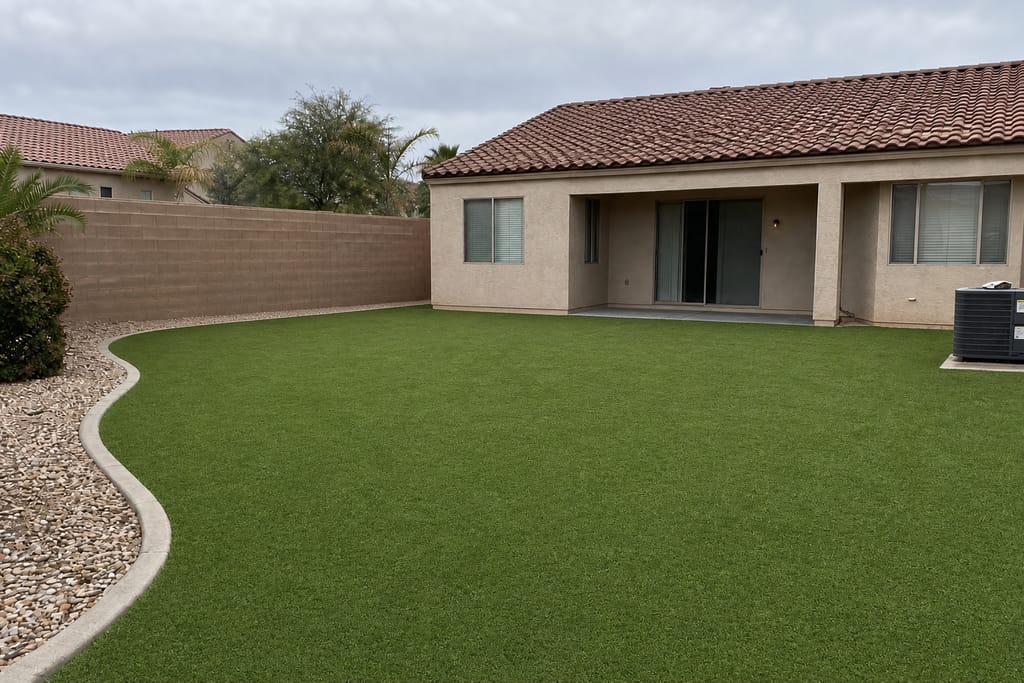
After
FAQs
Desert-Adapted Turf Installs FAQs
Does artificial turf actually hold up in Arizona summer heat without melting or getting too hot to walk on?
Heat-rated fiber and reflective infill significantly reduce surface temperature compared to standard turf, though any dark surface in direct sun will still get warm during peak afternoon hours.
What is the best artificial grass for hot climates?
Polyethylene fibers paired with reflective or cooling infill and UV-stabilized backing perform best under extended heat exposure, which is why we spec those for Coolidge installs specifically.
Does desert-adapted turf cost more than standard turf?
Typically 10-20% more due to the specialized fiber and infill, but it holds color and surface comfort longer, which matters more here than in milder climates.
Will the turf fade faster in full sun exposure?
UV-stabilized backing and fiber slow fading considerably compared to non-rated turf, though some gradual fading over many years of direct sun is normal for any synthetic product.
Can I get desert-adapted turf on just the hottest part of my yard?
It's common to spec heat-rated materials on south or west-facing sections that get the most direct afternoon sun and standard turf elsewhere.
Next step
Get a Desert-Adapted Turf Install Estimate in Coolidge
Call (928) 766-4895 or request a free estimate for turf built to actually hold up through Coolidge summers.
More services
Other Artificial Turf services
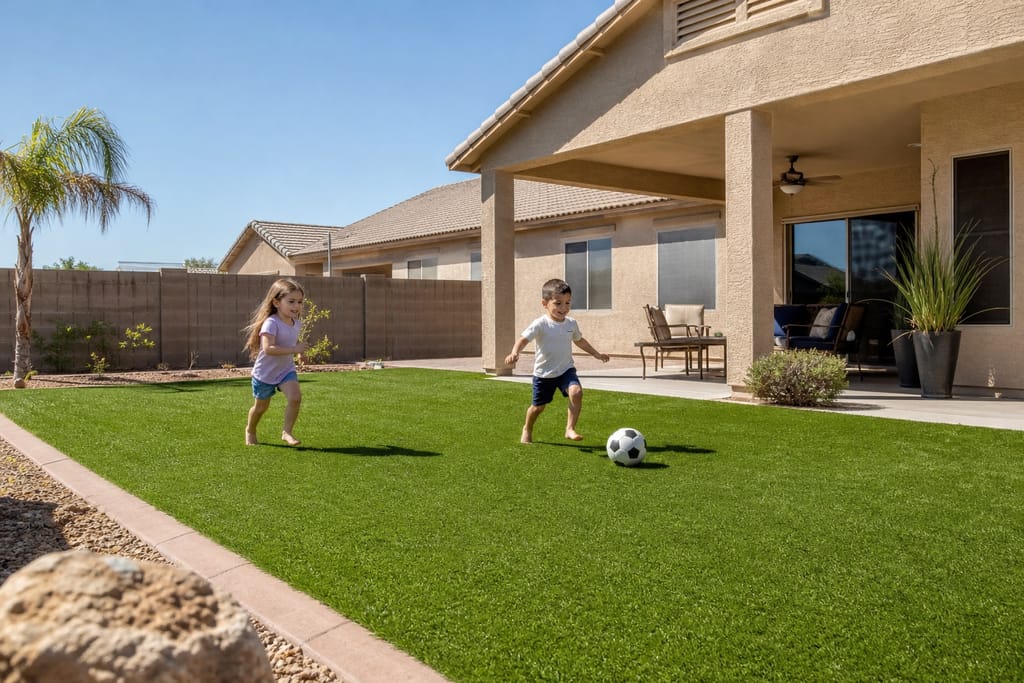
Artificial Turf Installation
Artificial turf installation with decomposed granite base, heat-rated fiber, and seamed edges. Free estimates.
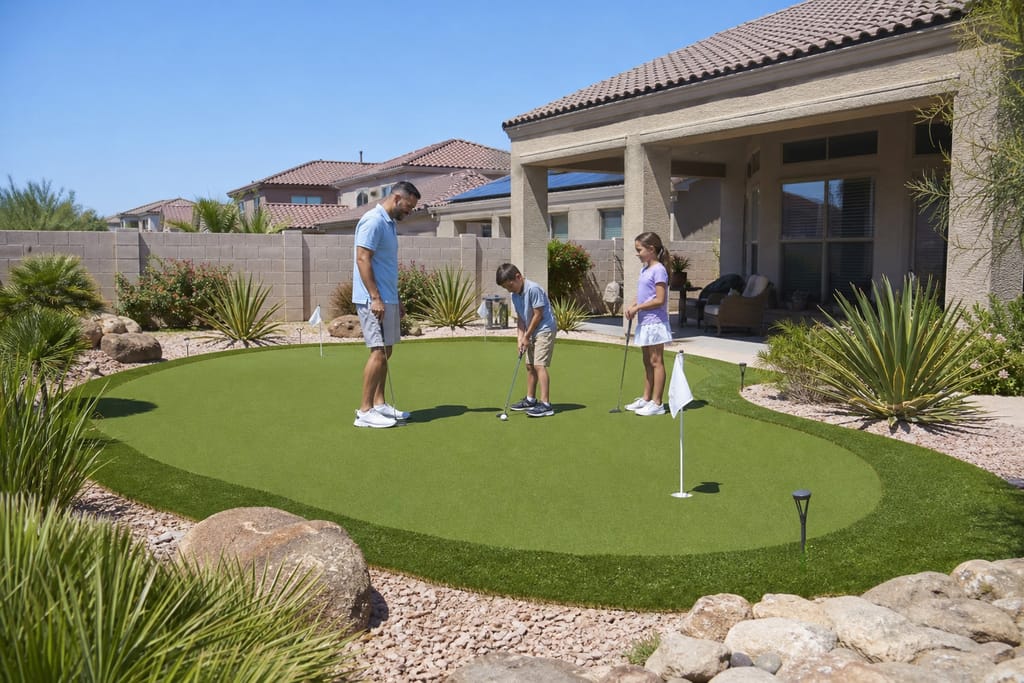
Putting Green Installation
Backyard putting green installation with contoured bases, regulation cups, and desert-rated turf. Free estimates.
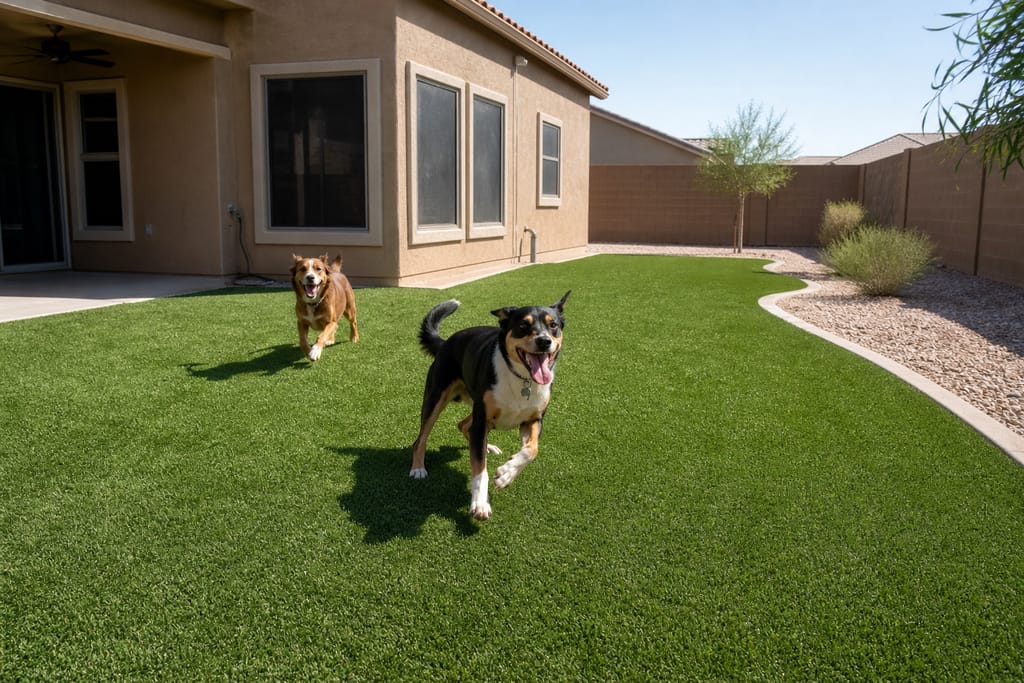
Pet Turf Installation
Pet-friendly artificial turf installation in Coolidge, AZ with drainage base and odor-control infill. Free estimates, no mud or dead patches.
Ask about Desert-Adapted Turf Installs
Tell us about the project and how to reach you.